Water under your house is never a good thing. If you live around Wilder, you already know how our heavy winter snowmelt and sudden spring rainstorms can test the drainage around your foundation. When that moisture sneaks beneath your floors, it settles into the crawl space and refuses to leave on its own. Dealing with standing water down there requires ongoing upkeep to keep your home solid.
Warning Signs You've Got Water Down There
Most homeowners do not spend a lot of time crawling around in the dark beneath their floorboards. You usually find out you have a problem because the house starts talking to you. You might notice a musty, damp smell creeping up through the floor vents, especially on humid mornings. Sometimes your floors start feeling spongy near the kitchen or entryway, or you see warped baseboards. If your allergies act up the second you walk through the front door, or you spot condensation fogging up your lower windows, take a flashlight and look underneath. Standing puddles, damp insulation sagging from the joists, and white powdery buildup on the foundation walls are dead giveaways that water is pooling where it shouldn't.
What Regular Maintenance Looks Like
Keeping that space dry is not a one-and-done project. You have to stay ahead of it. Every few months, head down or peek into the access hatch. Check your sump pump if you have one by pouring a bucket of water into the pit to make sure the float switch kicks on and pumps it outside. Clear out any leaves or debris blocking your exterior foundation vents. If you are running a dehumidifier down there, empty the drain line and check the filter. Down here in the Treasure Valley, our soil can shift and settle with the extreme temperature swings between scorching summers and freezing winters, so walk the perimeter of your house after a heavy thaw to make sure rain and melting snow are sloping away from your foundation instead of pooling against it.
Extending the Life of Your Waterproofing Work
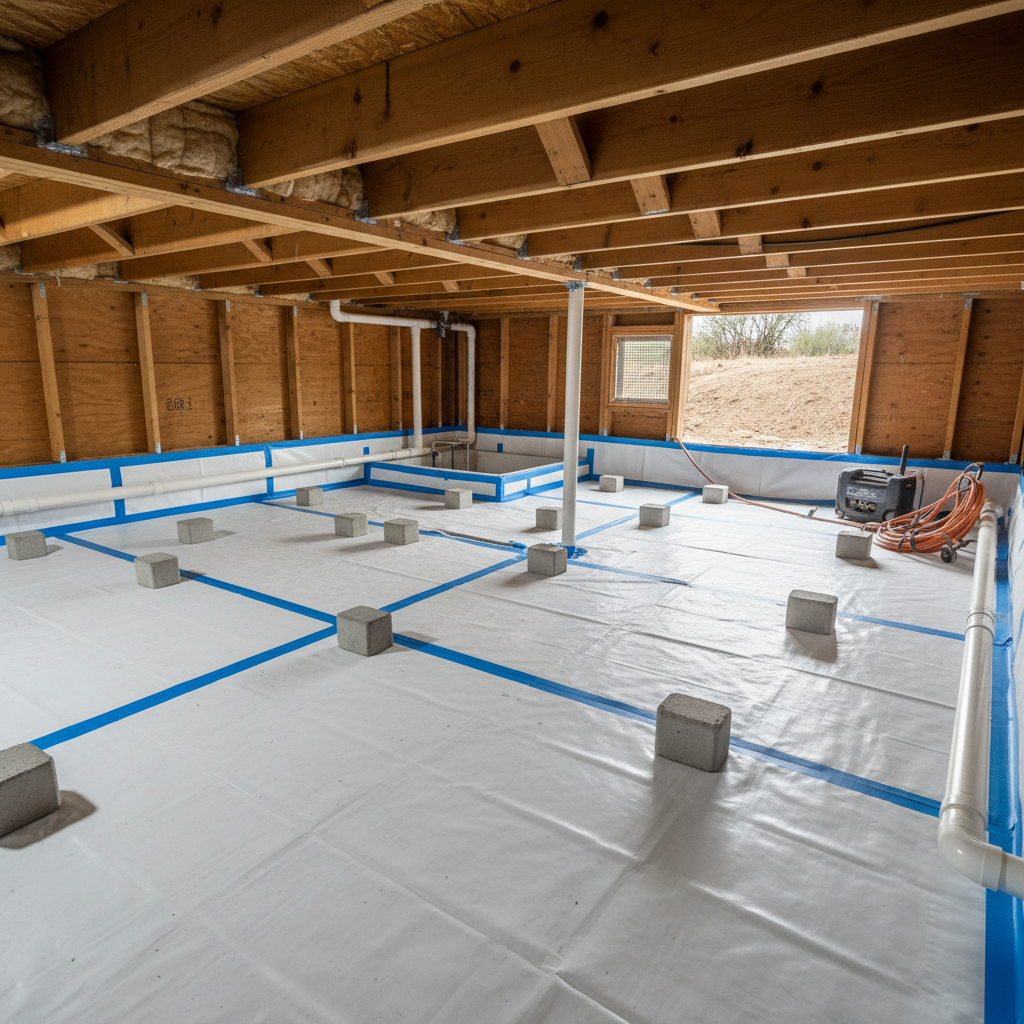
If you have already had water removed or invested in a drainage system, you want it to last. The biggest mistake people make is treating the crawl space like a storage shed and tearing up the vapor barrier. That thick plastic sheeting on the ground is doing heavy lifting by stopping ground moisture from evaporating into your floor joists. Keep it patched up if it gets punctured. Make sure your gutters and downspouts are actually carrying roof runoff ten feet away from the house, not just dumping it right next to the foundation wall. Little habits like keeping your window wells covered and checking your plumbing lines for slow drips will save you major headaches down the road.
When to Call a Professional
Some jobs you can handle on a Saturday afternoon, but heavy water intrusion usually is not one of them. If you have standing water that keeps coming back after you clear it, or if you spot dark mold colonies spreading across the wooden framing, it is time to bring in backup. Zenith Restoration sees what happens when moisture is left to sit in local crawl spaces too long, and fixing structural wood rot is much more expensive than getting the water managed right the first time. Give Zenith Restoration a call when the pump fails, the mold moves in, or the water volume is just too much to handle with DIY gear.